How to Choose the Right CRM for Your Small Business (Without the Overwhelm)
The Right CRM Can Change Everything - Here Is How to Find Yours
If you have ever Googled best CRM for small business and closed the tab more confused than when you started, you are not alone. There are hundreds of CRM tools on the market, each promising to transform your business. And yet most small business owners end up either picking the wrong one, paying for features they never use, or avoiding the decision altogether.
The truth is, choosing a CRM does not have to be complicated. You just need the right framework and a clear understanding of what your business actually needs right now. Once you have your CRM in place, everything else - from automating your first tasks to scaling your entire business - becomes possible.
Key Take-Aways
Choose a CRM based on your current stage, not your dream future state.
Prioritize ease of use and quality support, especially if you are implementing solo.
Look for a system that integrates with your existing tools or replaces the need for multiple apps.
Factor in the total cost of ownership, not just the monthly fee.
The right CRM should feel like a natural extension of how you already do business.
What Is a CRM and Why Does Your Small Business Need One?
A CRM (Customer Relationship Management) system is a tool that helps you organize, track, and manage your relationships with leads and customers. At its core, a good CRM answers three questions: Who are my leads and customers? Where are they in my sales process? And what is my next step with each of them?
Without a CRM, most small business owners rely on spreadsheets, sticky notes, email inboxes, and memory - a recipe for missed follow-ups, dropped leads, and stalled revenue. If you have already identified that you are ready to automate, the CRM is often your best first investment.
Step 1: Get Clear on Your Business Stage and Needs
Before you compare any tools, get honest about where you are. Ask yourself how many leads or customers you are managing monthly, what your current follow-up process looks like, whether you are a solo operator or have a small team, and what your biggest pain point is.
Your answers will immediately narrow the field. A solo service provider needs something very different from a five-person retail team. Do not buy for the business you hope to have in five years - buy for the business you have today, with room to grow.
Step 2: Know the Core Features to Look For
Not all CRMs are built the same. Here are the must-have features for most small business owners:
Contact management: Store and organize lead and customer records in one place.
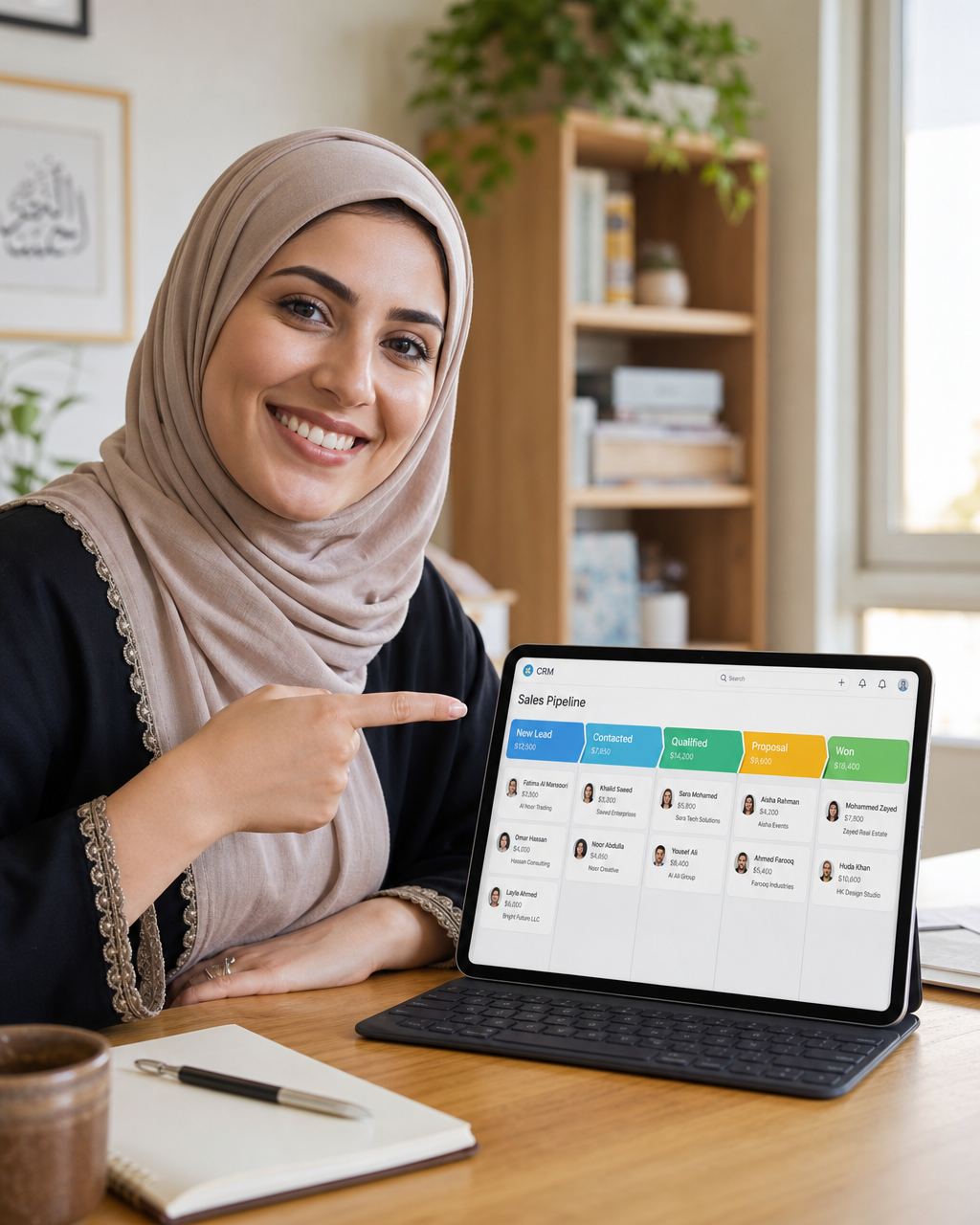
Pipeline tracking: Visualize where every lead is in your sales process.
Automated follow-up: Send emails, texts, or tasks automatically based on lead behavior.
Appointment scheduling: Allow leads to book directly into your calendar.
Two-way communication: Email, SMS, and social messaging from one inbox.
Reporting and dashboards: See your numbers at a glance without digging through data.

Step 3: Evaluate Ease of Use and Support
A powerful CRM you never use is worse than a simple one you use every day. When evaluating tools, ask whether you can set it up without a developer, whether the interface is clean and intuitive, and whether there is onboarding support or a community to help you when you get stuck.
Support quality is often overlooked until you need it. Look for tools that offer live chat, onboarding guidance, or a community of users - especially if you are implementing this on your own.
Step 4: Think About Integration and Scalability
Your CRM does not work in isolation. Consider what tools you are already using - your email platform, calendar, social media, payment processor - and whether the CRM integrates with them. The best CRM for a small business is one that connects your existing tools and grows with you.
An all-in-one system that combines CRM, automation, email, SMS, booking, and reporting can eliminate the need for a duct-taped stack of separate tools entirely. Once your CRM is set up, you will be ready to build AI-powered follow-up sequences and a complete sales funnel on top of it.
Step 5: Factor In Total Cost - Not Just the Subscription Price
The sticker price of a CRM is rarely the full story. When comparing costs, account for monthly or annual subscription fees, per-user pricing, add-on costs for features you actually need, implementation or onboarding fees, and the time cost of setup and learning curve. Sometimes paying a little more for an all-in-one solution saves you significantly in both money and time.
The Human-First CRM Advantage
At Tech With Heart Network, we believe the best CRM for a small business is one that supports human connection - not one that replaces it. The goal of smart technology is to handle the repetitive, time-consuming tasks so you can focus on the conversations and relationships that only you can have.
When your CRM is set up with intention - with automations that feel personal, follow-ups that sound like you, and systems that keep nothing from falling through the cracks - it does not just organize your business. It elevates it. Ready to take the next step? Learn how to identify which tasks to automate first.
Frequently Asked Questions
What is the best CRM for a small business with no tech experience?
Look for an all-in-one platform with a clean interface, strong onboarding support, and automation built in. The best CRM for beginners is one where the setup feels intuitive and help is easy to find when you need it.
How much should a small business spend on a CRM?
Most small businesses can find effective solutions in the $97 to $300 per month range. Factor in what you would spend on separate tools that a single CRM could replace - often an all-in-one system is more cost-effective.
Can a CRM replace my email marketing tool?
Many modern CRMs include email marketing capabilities, automated sequences, and list segmentation. Check out our guide on email marketing automation for small businesses to see how these tools work together.
When is the right time to get a CRM?
The right time is before you feel overwhelmed. If you are manually tracking leads in a spreadsheet, forgetting to follow up, or losing business because things are slipping through the cracks - it is time.
Ready to Stop Guessing and Start Growing?
If you are ready to put a real system behind your business - one that manages your leads, automates your follow-up, and keeps you focused on what matters - Tech With Heart Network can help. Our human-first, AI-powered business systems are built for small business owners who are done doing everything manually.
Let us build your smart system together. Reach out to us today.