
How AI-Powered Follow-Up Sequences Turn Cold Leads Into Paying Customers
Why Your Follow-Up Is Failing - And How AI Can Fix It
Here is a number that should change the way you think about follow-up: 80% of sales require at least five follow-up contacts - yet nearly half of salespeople give up after just one attempt. For small business owners juggling every role in their business, consistent follow-up is one of the first things to fall apart.
That is exactly where AI-powered follow-up sequences come in. If you have already set up your CRM and identified which tasks to automate first, building your follow-up sequence is your next highest-ROI move.
Key Take-Aways
Most sales happen after 5 or more touchpoints - automation makes that consistency possible.
A smart follow-up sequence adapts to lead behavior and stops when they convert.
The tone and voice of your messages matter as much as the timing.
Human-first automation sounds personal, not robotic.
Every small business owner needs a follow-up sequence - it is one of the highest-ROI systems you can build.
Why Most Small Business Follow-Up Fails
It is not that small business owners do not care about follow-up. It is that there is no system - follow-up depends on memory, and memory is unreliable. It feels awkward - nobody wants to come across as pushy. It is inconsistent - some leads get great follow-up, others get none. And it does not scale - manually following up with every lead is unsustainable as you grow.
The result? Leads go cold, revenue gets left on the table, and the business owner works harder than they need to.
What Is an AI-Powered Follow-Up Sequence?
An AI-powered follow-up sequence is a pre-built series of messages - emails, texts, or a combination - that go out automatically to leads at specific intervals after they first make contact with your business.
Unlike a generic drip campaign, a smart follow-up sequence is personalized using the lead's name, inquiry type, and behavior. It adapts based on whether the lead opens, clicks, or responds. It uses natural, conversational language that sounds like a real person wrote it. And it stops automatically when the lead books, buys, or opts out.

The Anatomy of a High-Converting Follow-Up Sequence
A well-built follow-up sequence typically includes 5 to 7 touchpoints spread over 7 to 14 days. Here is a framework that works for most service-based small businesses:
Day 0 - Instant Response
The moment a lead reaches out, an automatic message confirms receipt and sets expectations. This single message dramatically increases the chance the lead stays warm.
Day 1 - Value Touch
Share something genuinely helpful - a resource, a quick tip, or a relevant success story - that demonstrates your expertise without pitching.
Day 3 - Soft Ask
Check in and invite them to take the next step. Keep it low pressure and focused on their needs.
Day 5 - Social Proof
Share a client testimonial, case study, or review that speaks to the transformation you help people achieve.
Day 7 - Urgency or Clarity
Be direct. Let them know you want to help, ask if they are still interested, and give them an easy yes or no.
Day 10 - Final Reach
One last message. Keep it simple, warm, and without pressure. Leave the door open.
Day 14 - Move to Long-Term Nurture
If they have not converted, they move to a longer-term nurture sequence - monthly value touches that keep you top of mind until they are ready. This is also where your email marketing automation picks up the baton.
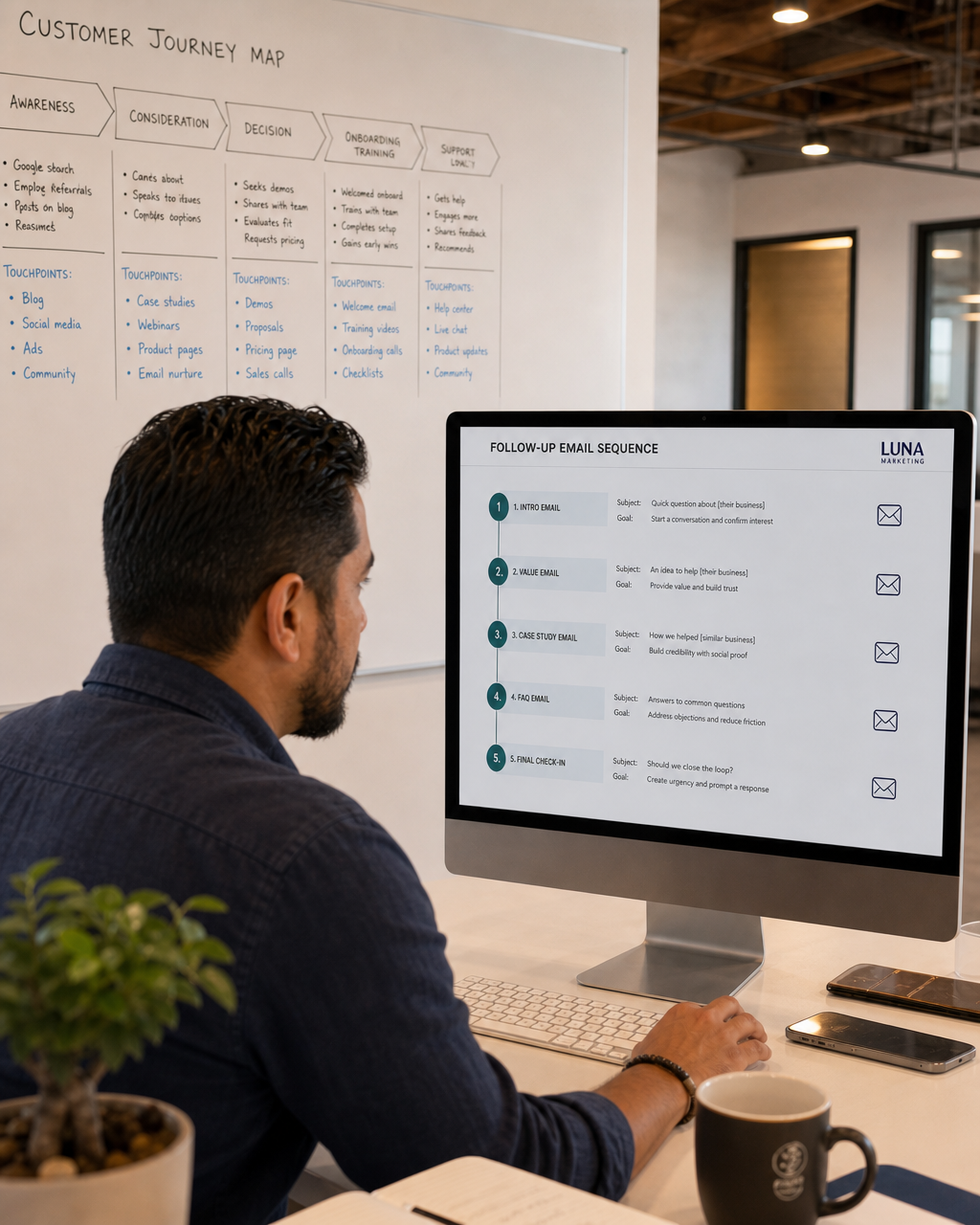
Why the Human-First Approach Matters in Automated Follow-Up
The biggest mistake businesses make with automated follow-up is writing messages that sound robotic, transactional, or copy-pasted. People can feel automation that is not designed with care - and it turns them off.
At Tech With Heart Network, we build follow-up sequences that are written in the business owner's authentic voice, structured around the customer's journey, and designed to feel like a helpful friend reaching out - not a faceless company chasing a sale.
What You Need to Build Your Follow-Up Sequence
Message templates written in your voice for each touchpoint
A clear offer or next step for the lead to take
Trigger conditions - what starts the sequence and what stops it
A calendar link or booking page for warm leads to convert immediately
Frequently Asked Questions
How long should a follow-up sequence be for a small business?
A strong initial sequence runs 7 to 14 days with 5 to 7 touchpoints. After that, unresponsive leads can move to a longer-term monthly nurture sequence to stay top of mind.
What is the difference between a follow-up sequence and a drip campaign?
A drip campaign sends the same messages to everyone on a schedule. A follow-up sequence is smarter - it personalizes based on the lead's behavior and stops when they take action.
Can I write the follow-up messages myself?
Yes - and you should. Your follow-up sequence should sound like you. Start with your authentic voice, then let your automation platform send it at the right times.
What if a lead does not respond at all?
Do not take it personally. Move them to a long-term nurture sequence. Timing matters - many leads convert weeks or months later when their circumstances change.
Ready to Build a Follow-Up System That Never Sleeps?
Your leads deserve consistent, thoughtful follow-up - and so does your revenue. At Tech With Heart Network, we help small business owners build AI-powered follow-up systems that convert more leads without working more hours. When you are ready to take the next step, learn how to automate your Google review requests and build a complete sales funnel around your follow-up system.
Let us build yours. Reach out to Tech With Heart Network today.